Publication Category: Reproductive Health Publications​

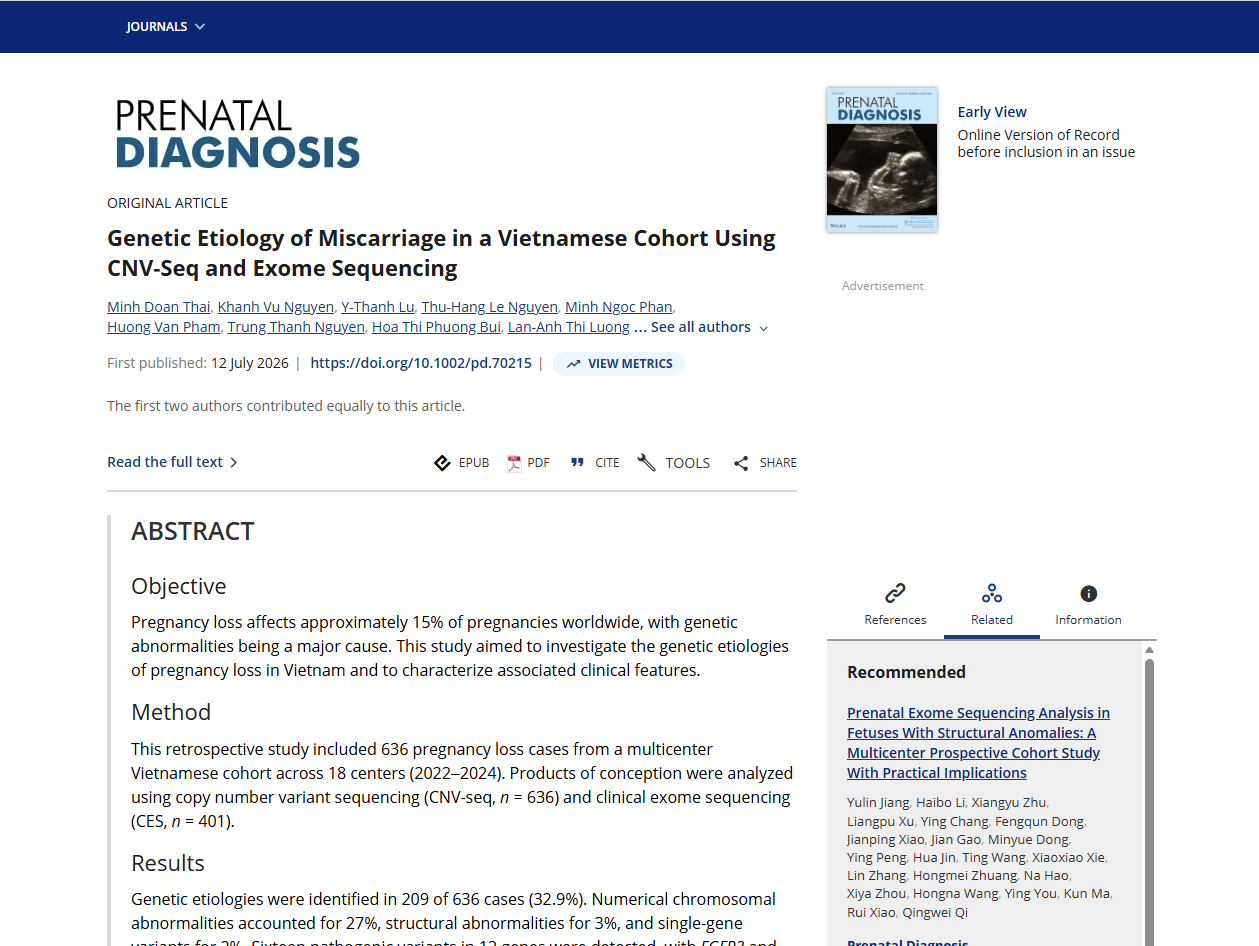
Genetic Etiology of Miscarriage in a Vietnamese Cohort Using CNV-Seq and Exome Sequencing

Pregnancy loss affects approximately 15% of pregnancies worldwide, with genetic abnormalities being a major cause. This study aimed to investigate the genetic etiologies of pregnancy loss in Vietnam and to characterize associated clinical features.

Journal:

Publication date:

Authors:

Test:

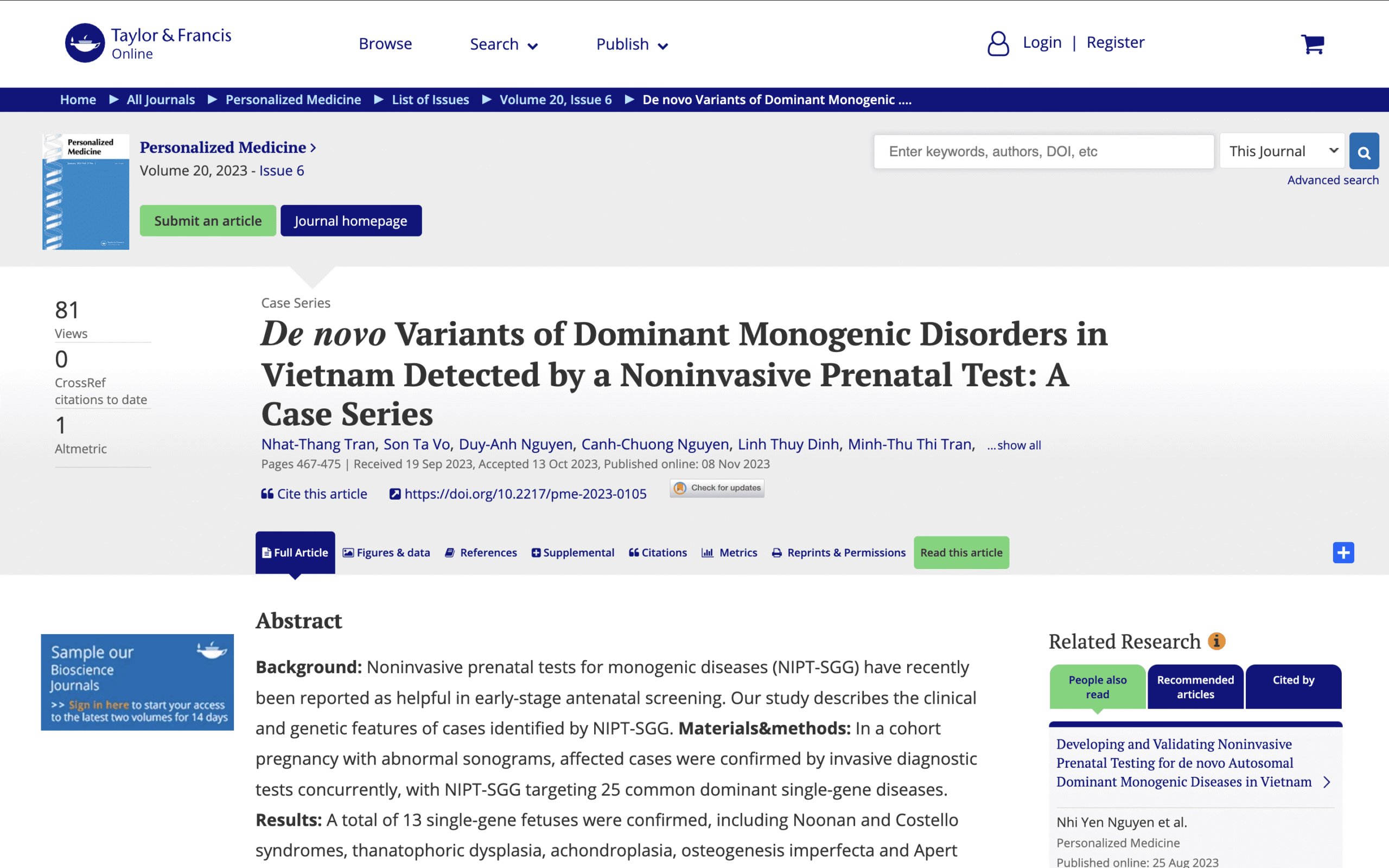
De novo Variants of Dominant Monogenic Disorders in Vietnam Detected by a Noninvasive Prenatal Test: A Case Series

Noninvasive prenatal tests for monogenic diseases (NIPT-SGG) have recently been reported as helpful in early-stage antenatal screening. Our study describes the clinical and genetic features of cases identified by NIPT-SGG. Materials&methods: In a cohort pregnancy with abnormal sonograms, affected cases were confirmed by invasive diagnostic tests concurrently, with NIPT-SGG targeting 25 common dominant single-gene diseases.

Journal:

Publication date:

Authors:

Test:

Establishment and Assessment of a Non-invasive Prenatal Testing Protocol for 22q11.2 Deletion Syndrome

We established a non-invasive prenatal testing protocol to screen for fetal microdeletion, specifically at 22q11.2 causing DiGeorge syndrome. This is an important step towards expanding the scope of current noninvasive prenatal testing to detect a wide spectrum of fetal diseases caused by microdeletion

Journal:

Publication date:

Authors:

Test:

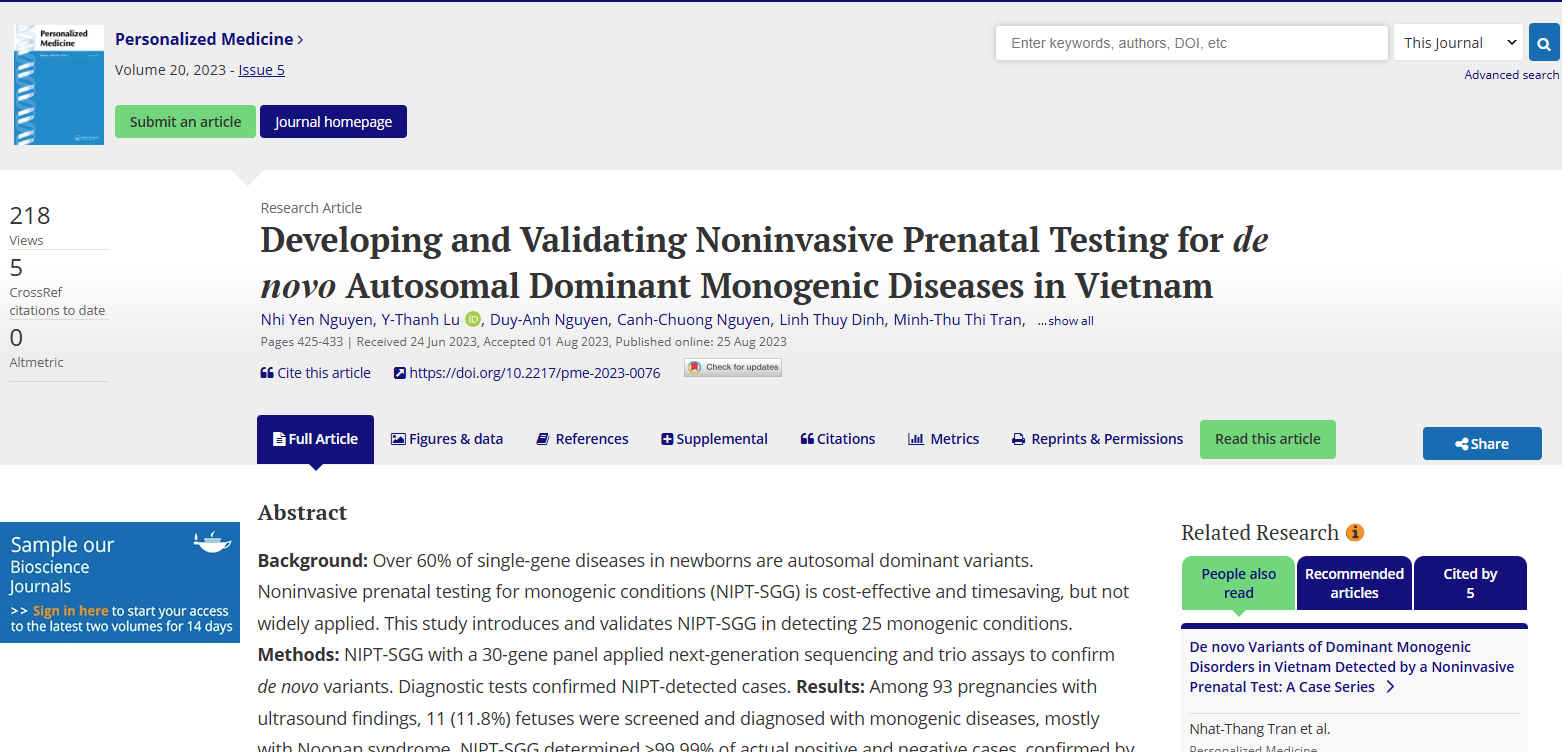
Developing and validating noninvasive prenatal testing for de novo autosomal dominant monogenic diseases in Vietnam

Over 60% of single-gene (SGG) diseases in newborns are autosomal dominant variants. NIPT for monogenic conditions is cost-effective and time saving but not widely applied. This study introduces and validates NIPT-SGG in detecting 25 monogenic conditions.

Journal:

Publication date:

Authors:

Test:

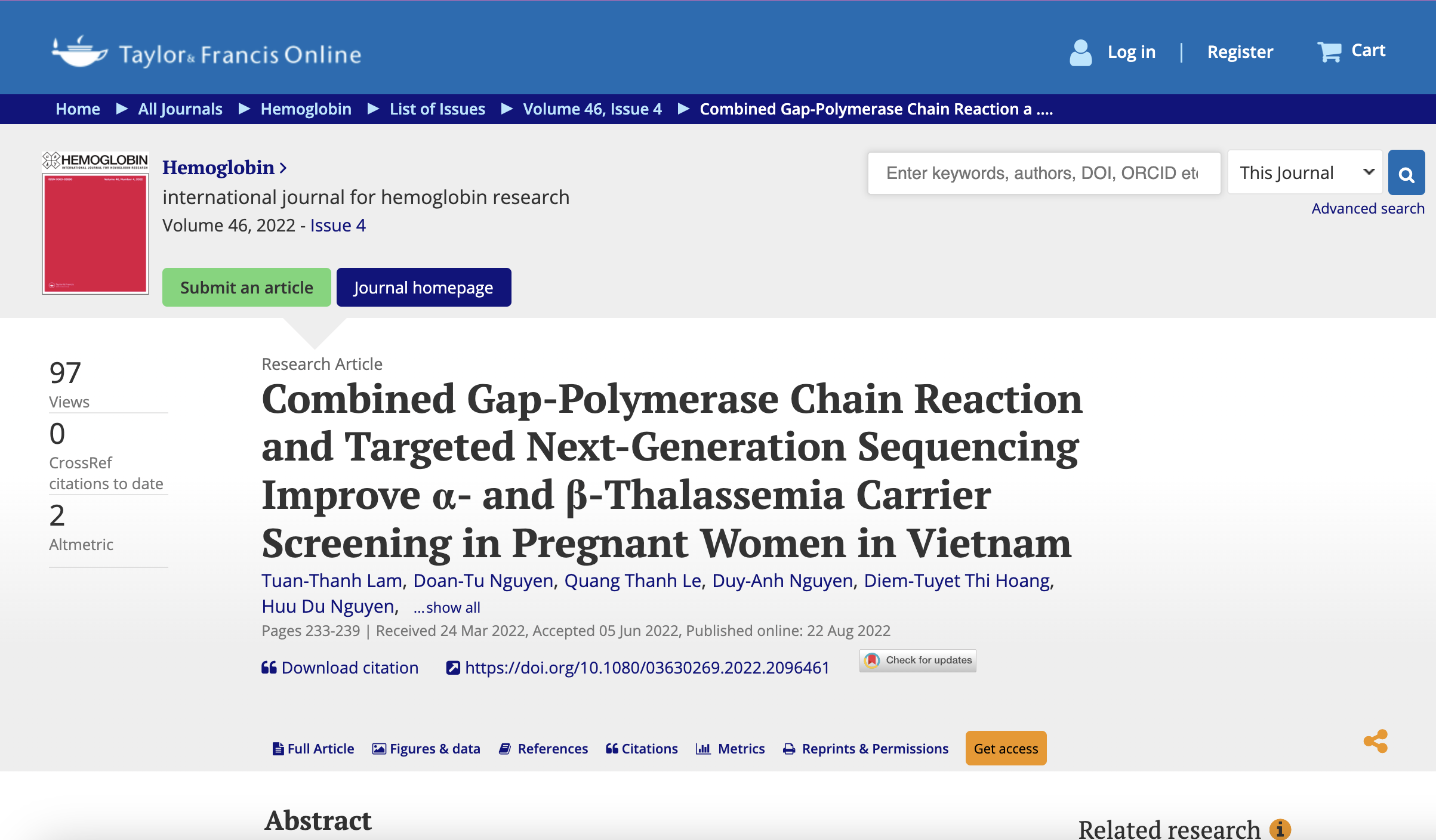
Combined Gap-Polymerase Chain Reaction and Targeted Next-Generation Sequencing Improve α- and β-Thalassemia Carrier Screening in Pregnant Women in Vietnam

Vietnam has a high thalassemia burden. We collected blood samples from 5880 pregnant Vietnamese women during prenatal health checks to assess thalassemia carrier frequency using combined gap-polymerase chain reaction (gap-PCR) and targeted next-generation sequencing (NGS).

Journal:

Publication date:

Authors:

Test:

Detection of maternal carriers of common α-thalassemia deletions from cell-free DNA

α-Thalassemia is a common inherited blood disorder manifested mainly by the deletions of α-globin genes. In geographical areas with high carrier frequencies, screening of α-thalassemia carrier state is therefore of vital importance.

Journal:

Publication date:

Authors:

Test:

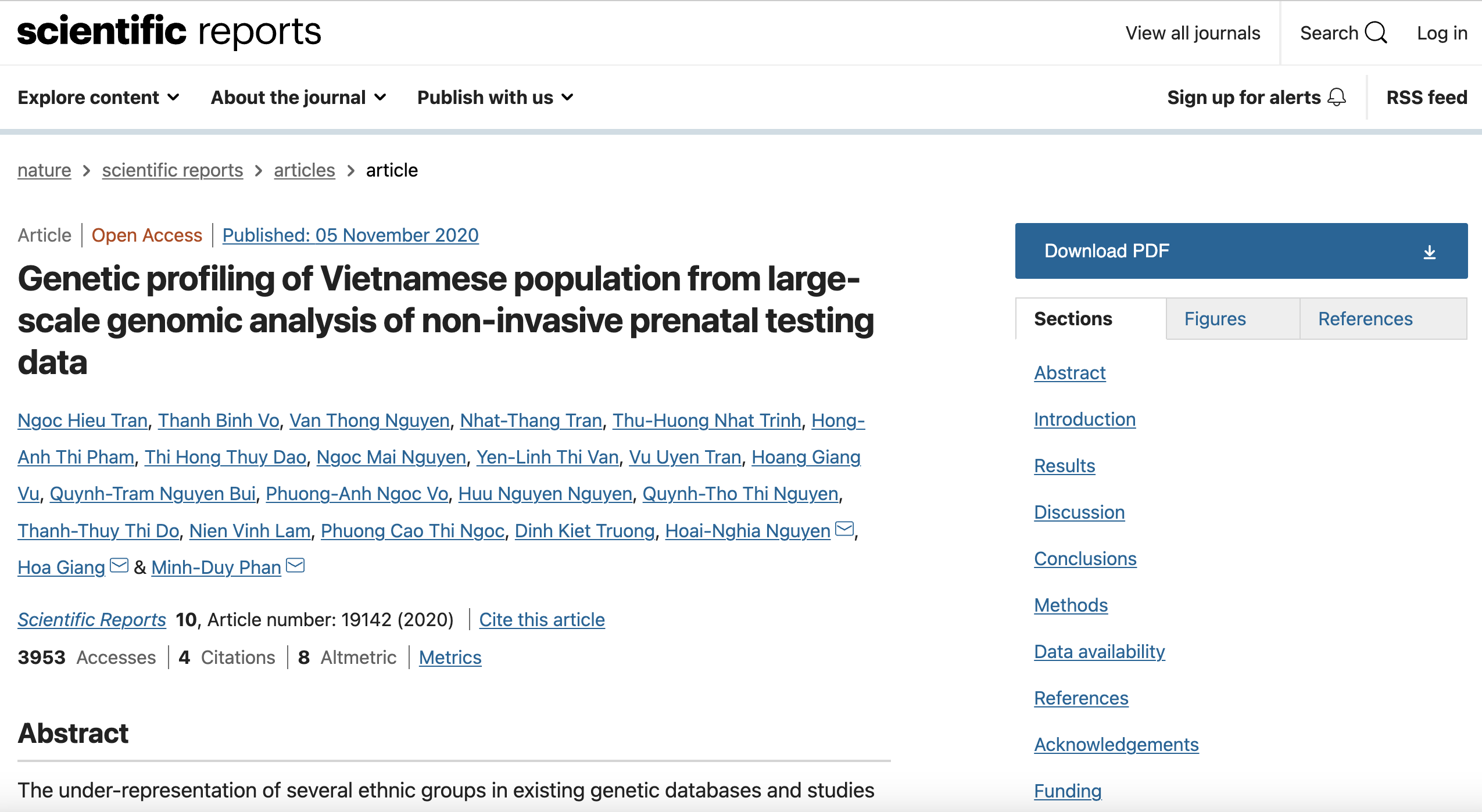
Genetic profiling of Vietnamese population from large-scale genomic analysis of non-invasive prenatal testing data

The under-representation of several ethnic groups in existing genetic databases and studies have undermined our understanding of the genetic variations and associated traits or diseases in many populations.

Journal:

Publication date:

Authors:

Test:

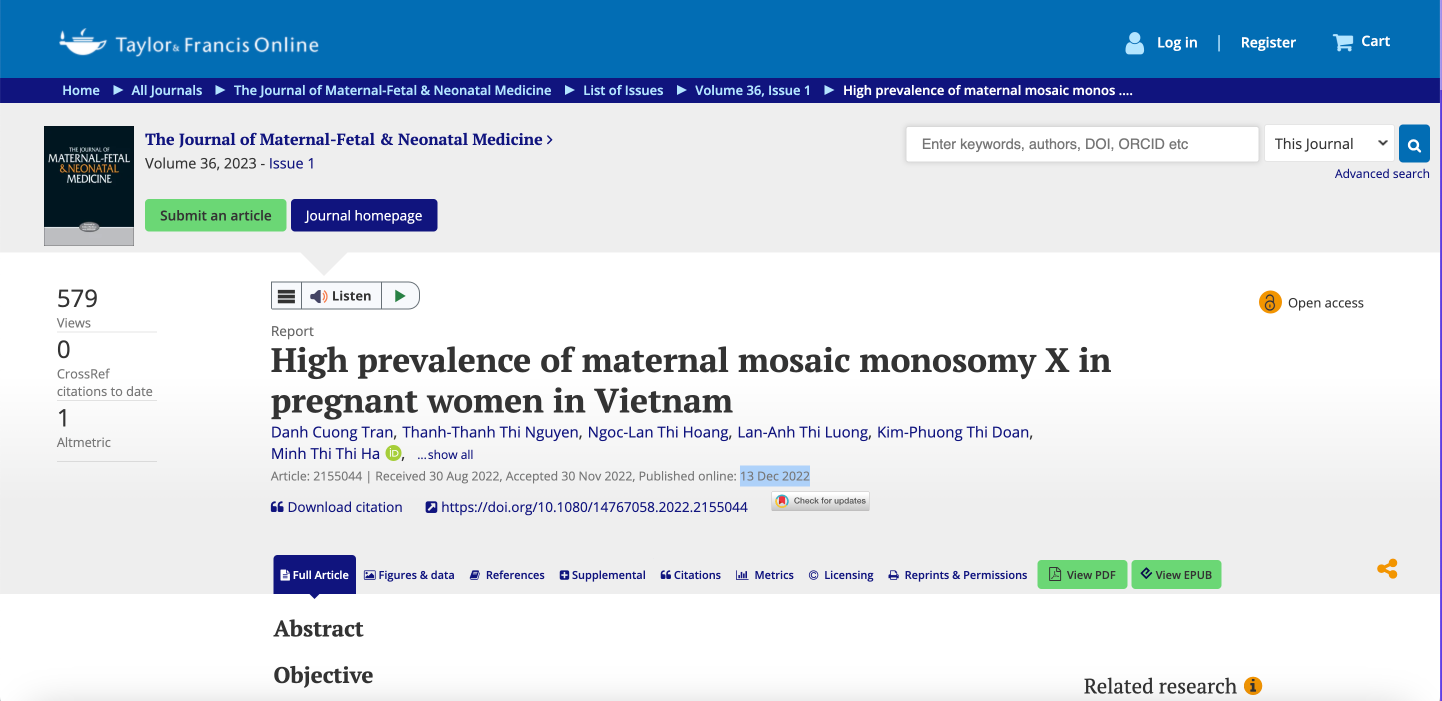
High prevalence of maternal mosaic monosomy X in pregnant women in Vietnam

To demonstrate the prevalence of maternal mosaic monosomy X (MMXO) in a cohort of pregnant women in Vietnam. All 105,594 singleton pregnant women undergoing noninvasive prenatal screening (NIPS) between January 2019 and February 2021 in Vietnam were analyzed by measuring discordance between size- and count-based z-scores for chromosome X (ChrX)...

Journal:

Publication date:

Authors:

Test:

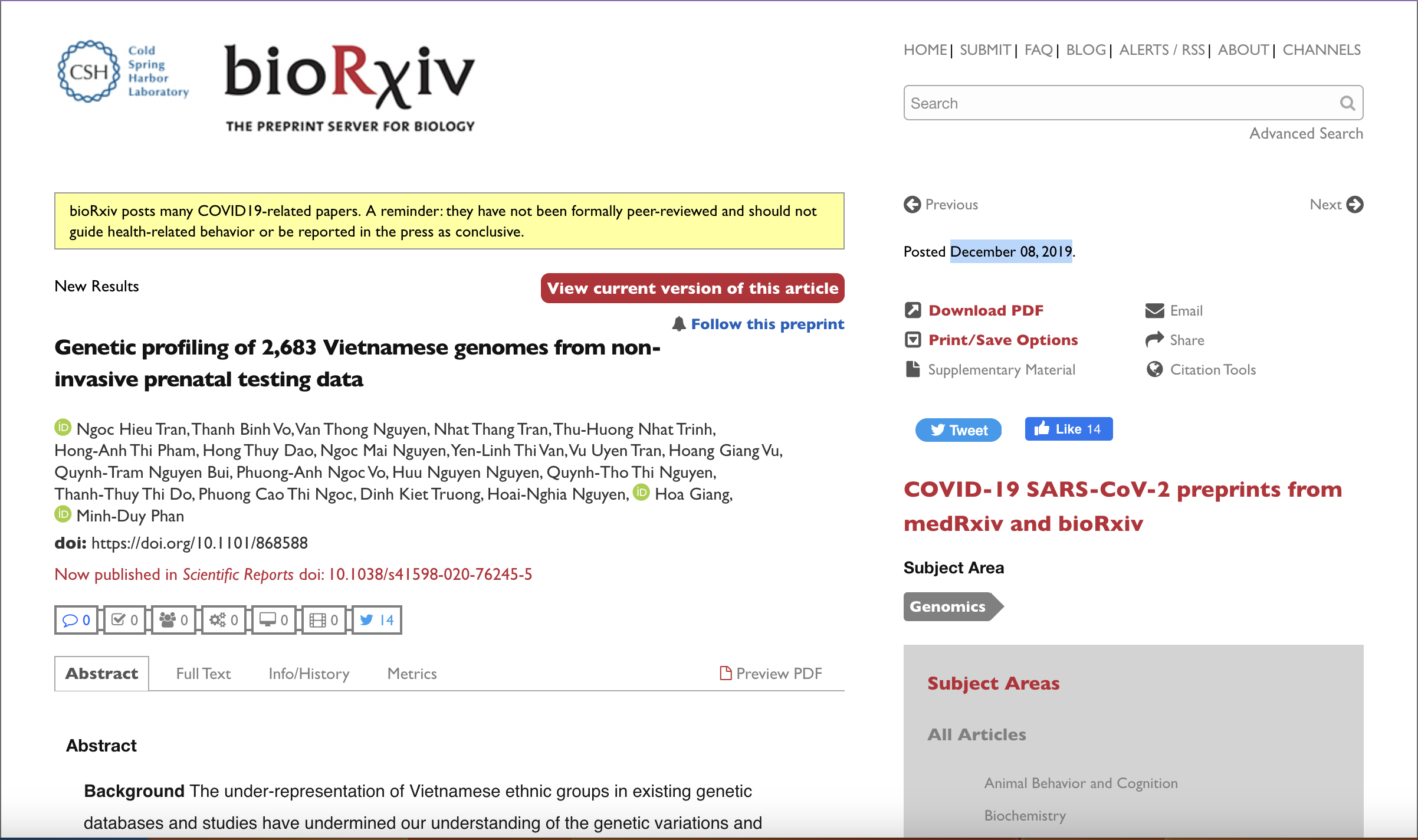
Genetic profiling of 2,683 Vietnamese genomes from non-invasive prenatal testing data.

The under-representation of Vietnamese ethnic groups in existing genetic databases and studies have undermined our understanding of the genetic variations and associated traits or diseases in the population.

Journal:

Publication date:

Authors:

Test:

Reducing false positive rate of fetal monosomy X in non-invasive prenatal testing using a combined algorithm to detect maternal mosaic monosomy X.

The false positive rate of detecting monosomy X by NIPT is higher than that of other autosomal aneuploidies, due in part to maternal mosaic monosomy X.

Journal:

Publication date:

Authors:

Test: