Publication Category: Oncology Publications

Multimodal analysis of genome-wide methylation, copy number aberrations, and end motif signatures enhances detection of early-stage breast cancer

The article showed that a multimodal liquid biopsy assay based on analysis of cfDNA methylation, CNA and EM could enhance the accuracy for the detection of early- stage breast cancer. By identifying distinct profiles of genome-wide methylation changes (GWM), copy number alterations (CNA), and 4-nucleotide oligomer (4-mer) end motifs (EM) in cfDNA of breast cancer patients, combination model outperformed base models built from individual features, achieving an AUC of 0.91 (95% CI: 0.87-0.95), a sensitivity of 65% at 96% specificity.

Journal:

Publication date:

Authors:

Test:

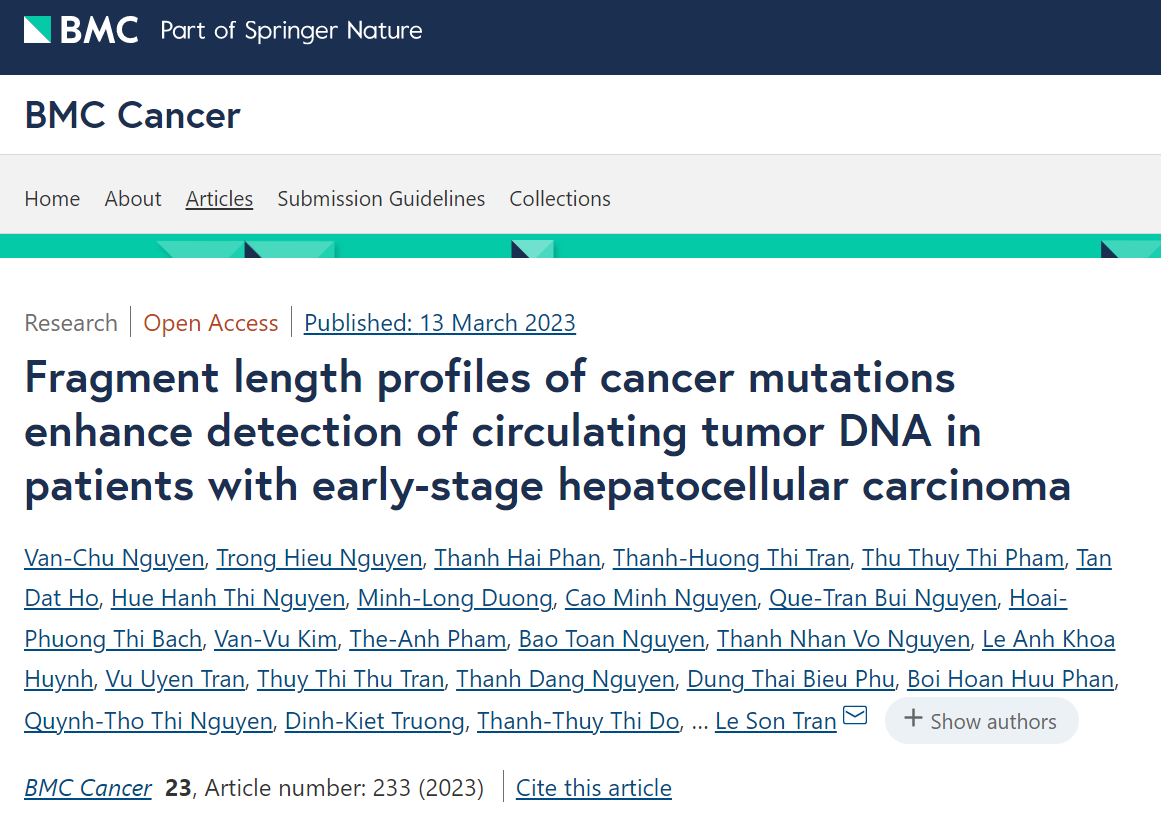
Fragment length profiles of cancer mutations enhance detection of circulating tumor DNA in patients with early-stage hepatocellular carcinoma

Our model achieved an area under the curve (AUC) of 0.88, a sensitivity of 89%, and a specificity of 82% in the discovery cohort consisting of 55 PwHCC and 55 healthy participants. In an independent validation cohort of 54 PwHCC and 53 healthy participants, the established model achieved comparable classification performance with an AUC of 0.86 and yielded a sensitivity and specificity of 81%.

Journal:

Publication date:

Authors:

Test:

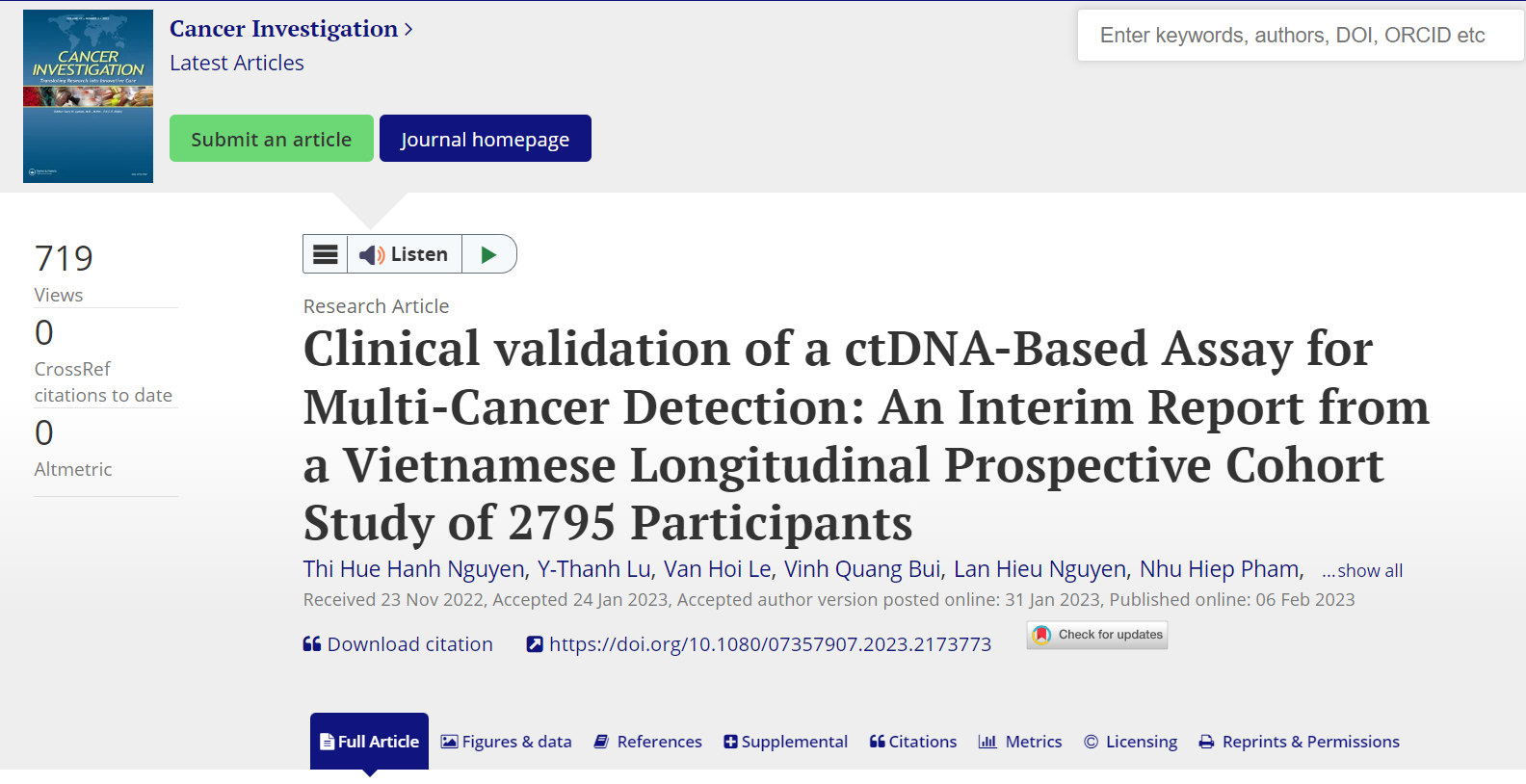
Clinical validation of a ctDNA-Based Assay for Multi-Cancer Detection: An Interim Report from a Vietnamese Longitudinal Prospective Cohort Study of 2795 Participants

Our analysis of 2795 participants from 14 sites across Vietnam demonstrates its ability to detect cancers in asymptomatic individuals with a positive predictive value of 60%, with 83.3% accuracy in detecting tumor location.

Journal:

Publication date:

Authors:

Test:

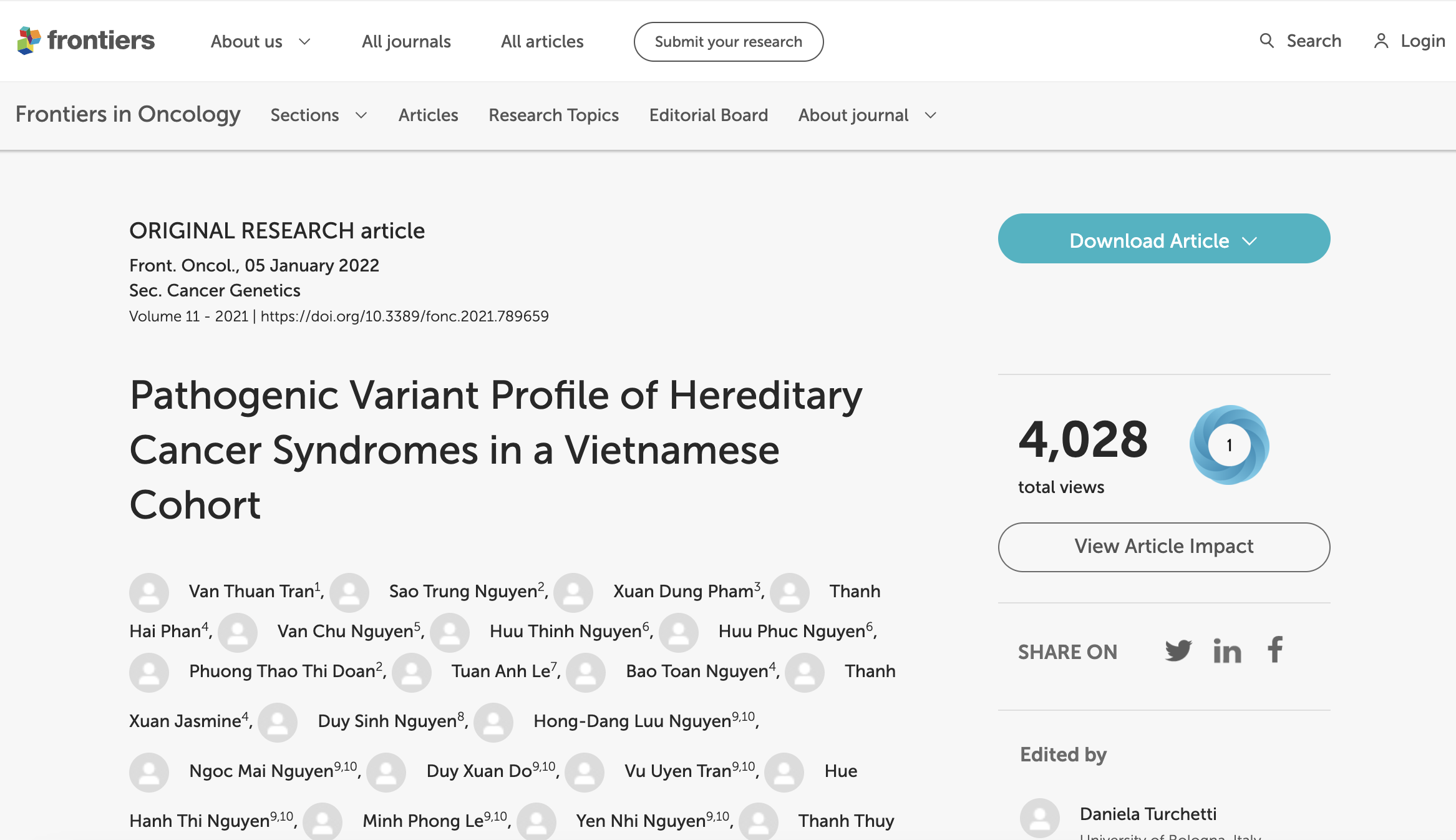
Pathogenic Variant Profile of Hereditary Cancer Syndromes in a Vietnamese Cohort

Hereditary cancer syndromes (HCS) are responsible for 5-10% of cancer cases. Genetic testing to identify pathogenic variants associated with cancer predisposition has not been routinely available in Vietnam. Consequently, the prevalence and genetic landscape of HCS remain unknown.

Journal:

Publication date:

Authors:

Test:

Building the procedure of SPOT-MAS technology: multiple cancer early detection

Evaluate SPOT-MAS performance on detection of 4 common cancer types AUC 0.93; SEN: 73.9%; SPEC 95.9%

Journal:

Publication date:

Authors:

Test:

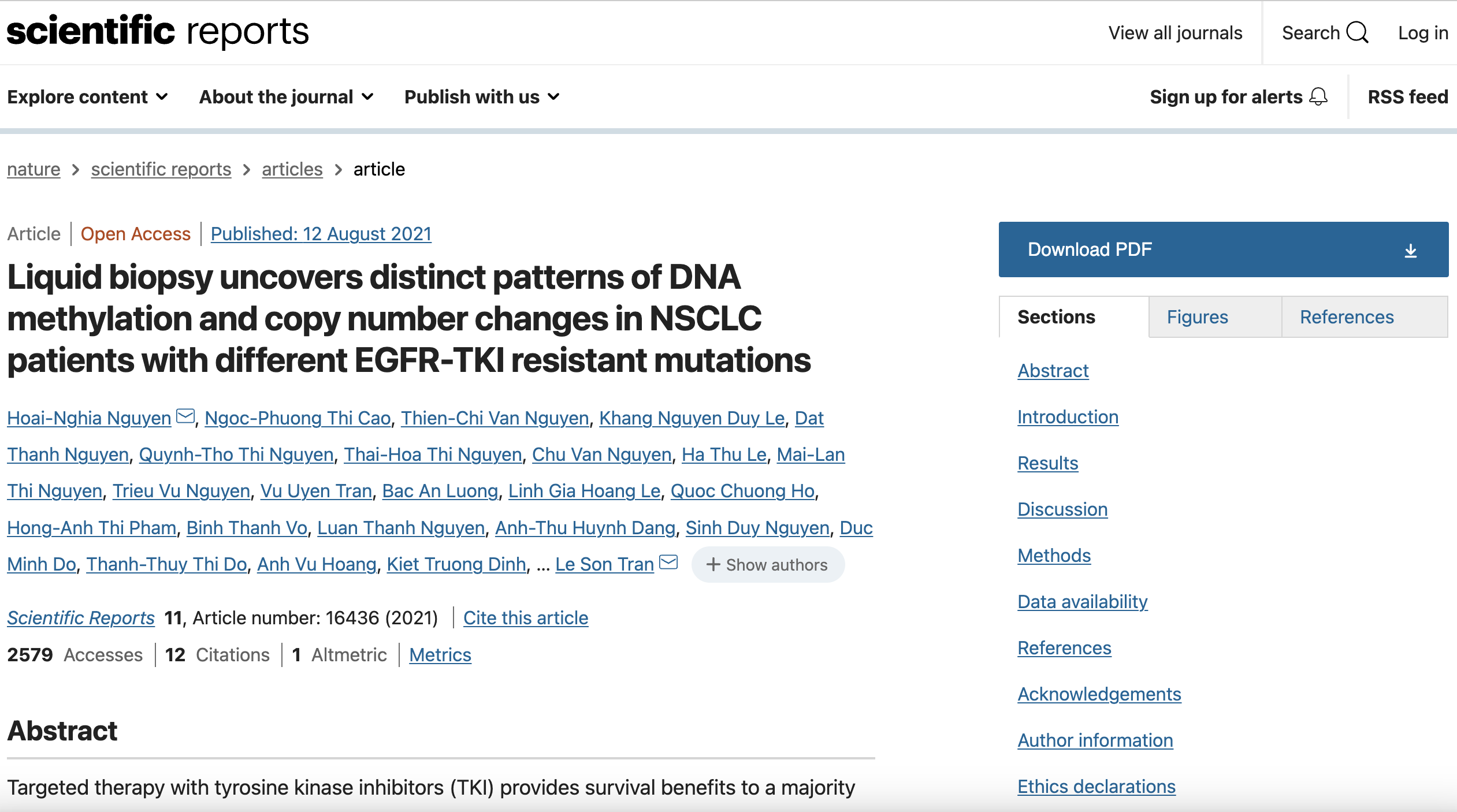
Liquid biopsy uncovers distinct patterns of DNA methylation and copy number changes in NSCLC patients with different EGFR-TKI resistant mutations

Targeted therapy with tyrosine kinase inhibitors (TKI) provides survival benefits to a majority of patients with non-small cell lung cancer (NSCLC). However, resistance to TKI almost always develops after treatment.

Journal:

Publication date:

Authors:

Test:

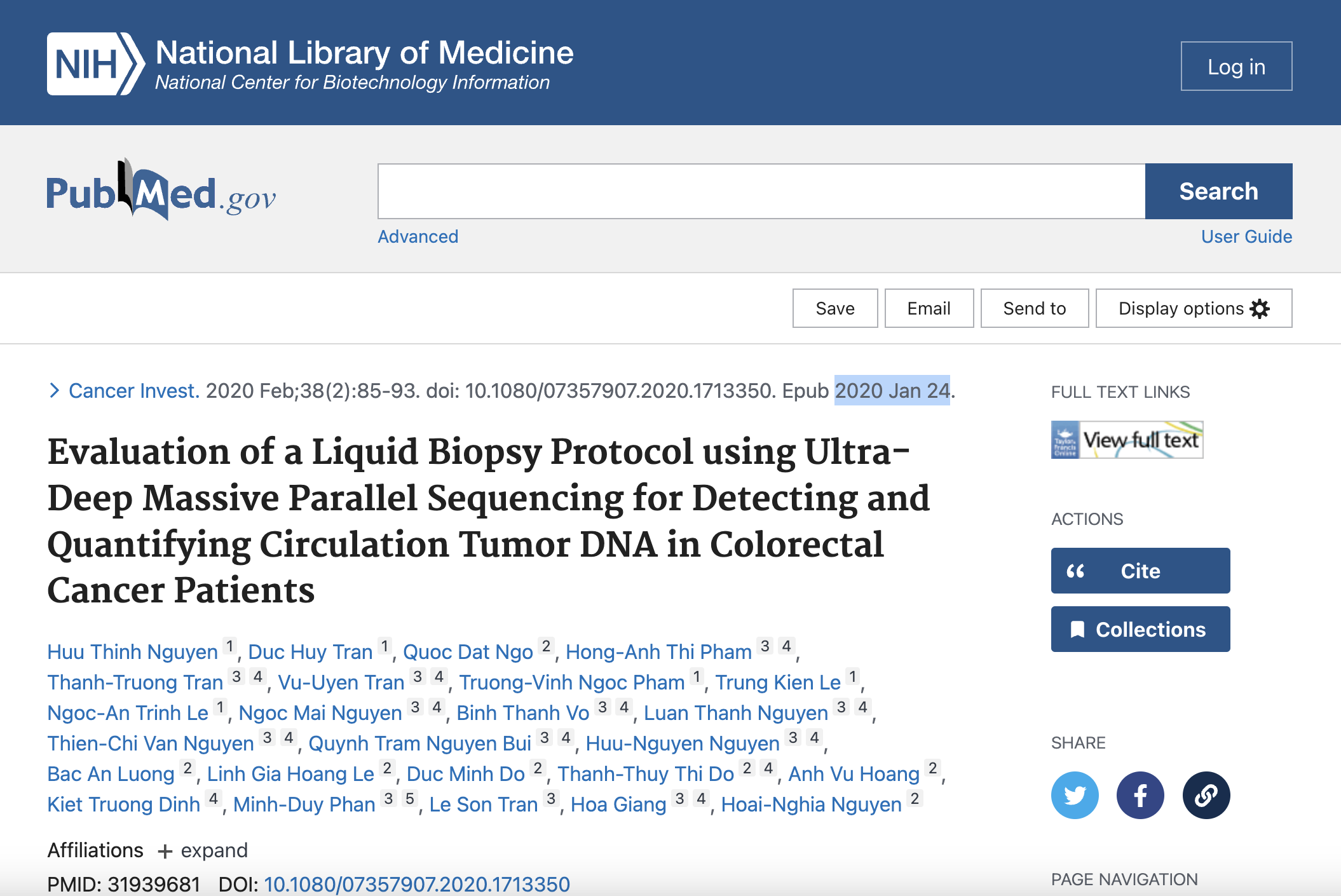
Evaluation of a Liquid Biopsy Protocol using Ultra-Deep Massive Parallel Sequencing for Detecting and Quantifying Circulation Tumor DNA in Colorectal Cancer Patients

The identification and quantification of actionable mutations are critical for guiding targeted therapy and monitoring drug response in colorectal cancer. Liquid biopsy (LB) based on plasma cell-free DNA analysis has emerged as a noninvasive approach with many clinical advantages over conventional tissue sampling.

Journal:

Publication date:

Authors:

Test:

Tumor genomic profiling and personalized tracking of circulating tumor DNA in Vietnamese colorectal cancer patients

Colorectal cancer (CRC) is the fifth most common cancer with rising prevalence in Vietnam. However, there is no data about the mutational landscape and actionable alterations in the Vietnamese patients.

Journal:

Publication date:

Authors:

Test:

Genetic landscape and personalized tracking of tumor mutations in Vietnamese women with breast cancer.

Using top-ranked mutations, we detected ctDNA in pre-operative plasma in 24.6–43.5% of the hormone-receptor-positive groups and 76.9–80.8% of the hormone-receptor-negative groups. The detection rate was associated with breast cancer subtypes and clinicopathological features that increased the risk of relapse. Interim analysis after a 15-month follow-up revealed post-operative detection of ctDNA in all three patients that had recurrence, with a lead time of 7–13 months ahead of clinical diagnosis.

Journal:

Publication date:

Authors:

Test:

Multimodal analysis of ctDNA methylation and fragmentomic profiles enhances detection of nonmetastatic colorectal cancer.

Early detection of colorectal cancer (CRC) provides substantially better survival rates. This study aimed to develop a blood-based screening assay named SPOT-MAS (‘screen for the presence of tumor by DNA methylation and size’) for early CRC detection with high accuracy.

Journal:

Publication date:

Authors:

Test: