The Oncology Expert Meeting, themed “The Application of Personalized Cancer Monitoring and Tracking to unravel Unmet Needs in Breast Cancer Management”

The Oncology Expert Meeting, themed “The Application of Personalized Cancer Monitoring and Tracking to unravel Unmet Needs in Breast Cancer Management”, jointly organised by PERABOI and Gene Solutions concluded last month, Feb 29.
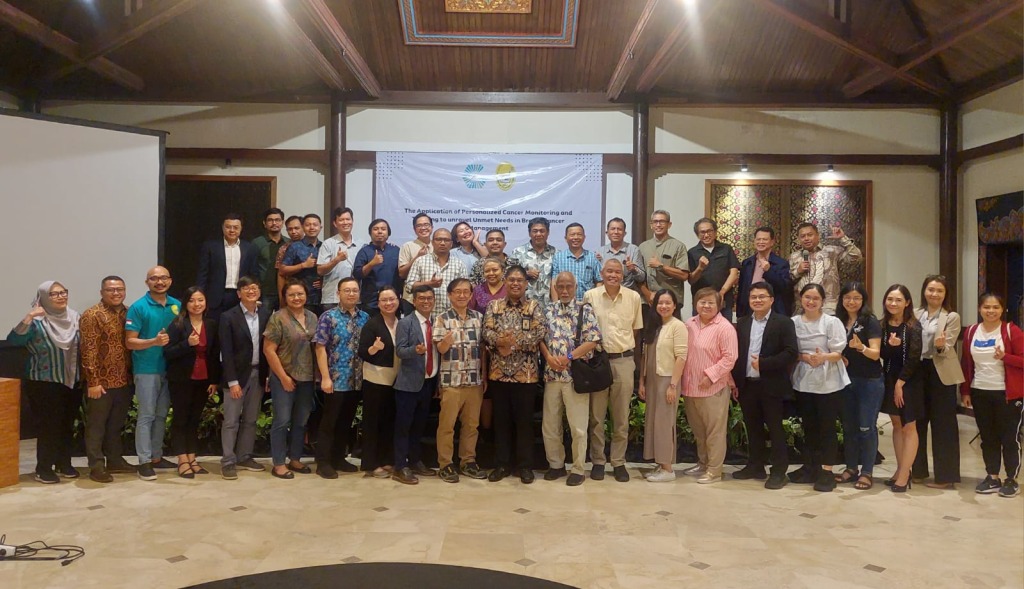
A strong lineup of speakers from our Southeast Asia usergroups and oncology clinical experts gathered to discuss their experiences in cancer management, innovative solutions on detecting MRD in solid tumor. The meeting served as a platform to exchange views and identify key challenges on the implementation of minimal residual disease (MRD) in a clinical setting.
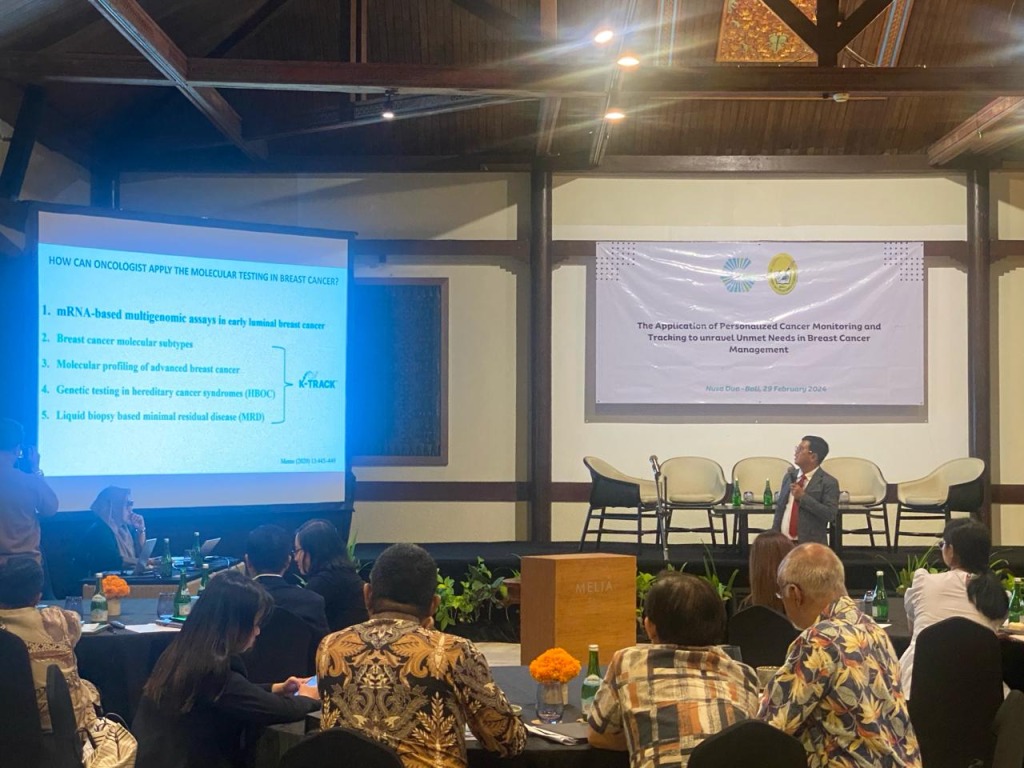
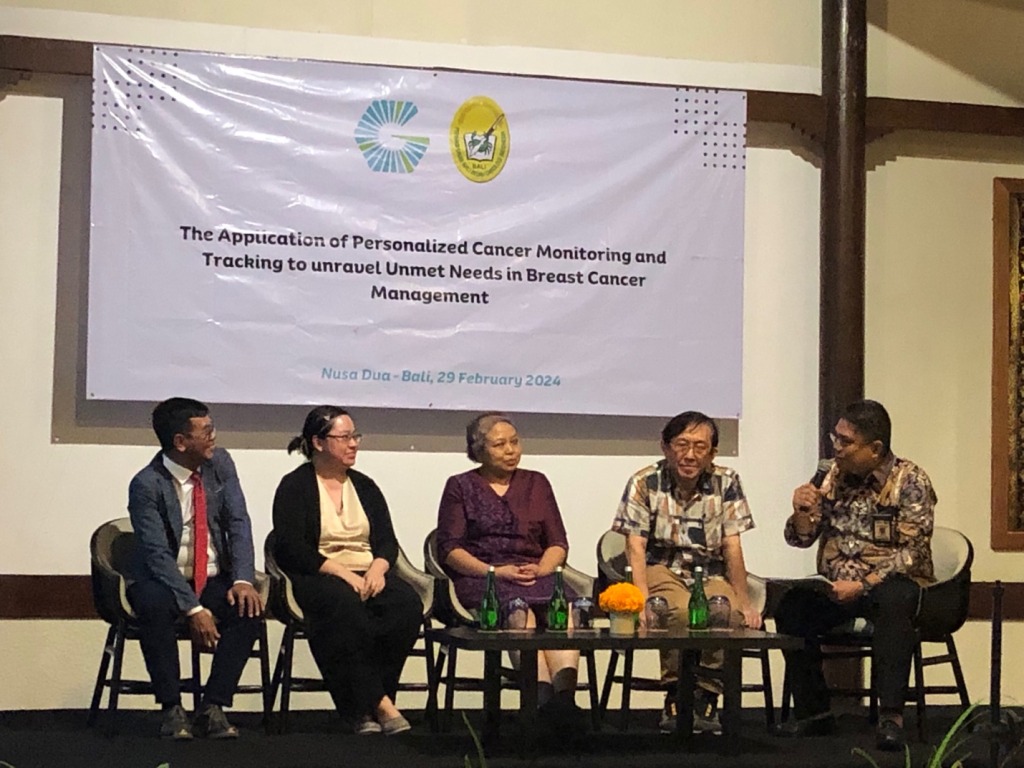
We saw keen exchange of experiences from Dr Pornchai from Thailand, dr. Ni Gustu Ayu Agung Manik Yuniawaty Wetan from RSUP Sanglah and dr. Samuel J Haryono from Siloan MRCCC. The meeting concluded with consensus on the need to drive more clinical education and common concerns on clinical reporting and patient guidance. This further drives our commitment to run regular satellite meetings across Southeast Asia to nurture the awareness and access to the utility of MRD testing in patient care management strategies.

About the meeting:
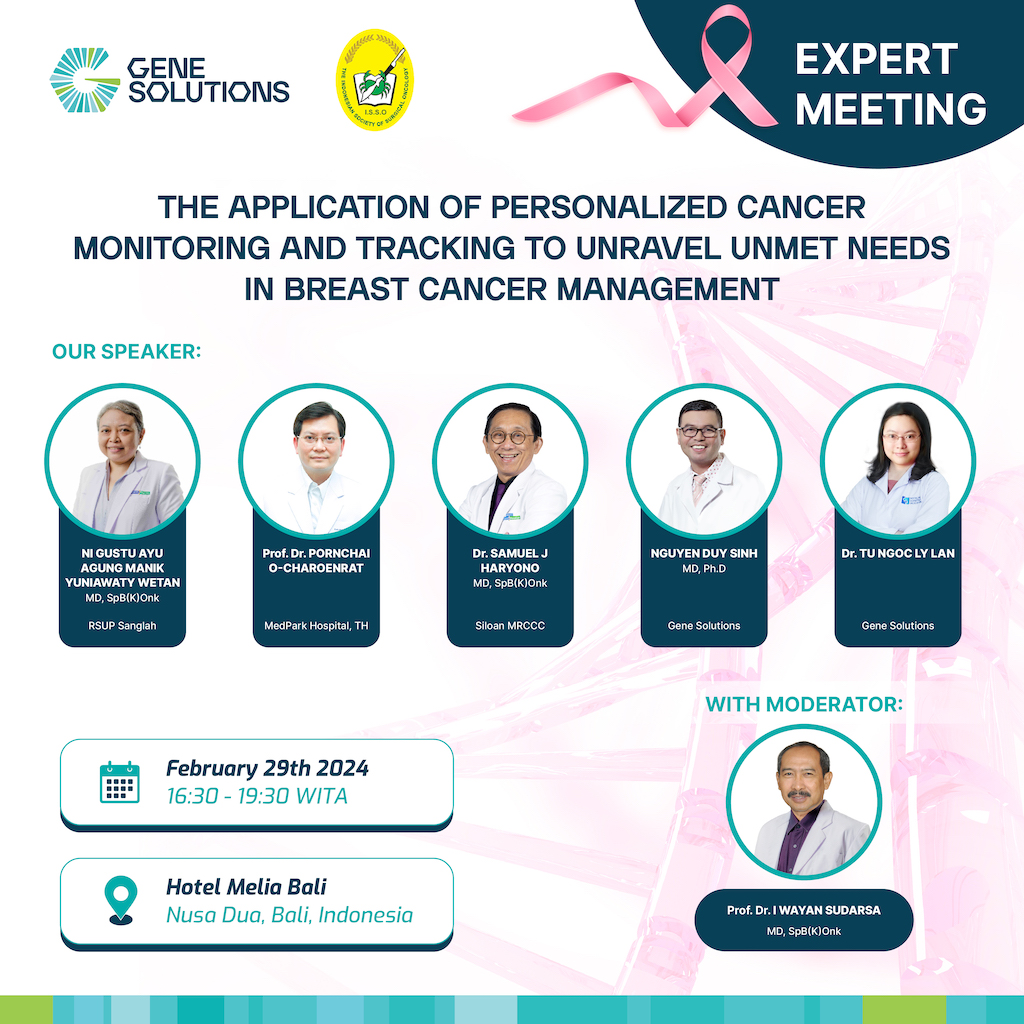
The application of personalized cancer monitoring and tracking to unravel unmet needs in breast cancer management

“The Application of Personalized Cancer Monitoring and Tracking to unravel Unmet Needs in Breast Cancer Management” meeting is part of a series of Regional Expert Meetings that Gene Solutions will be organising across Asia to facilitate collaboration among clinical centers driving genomic applications that make an impact to patient outcomes.
LATEST News

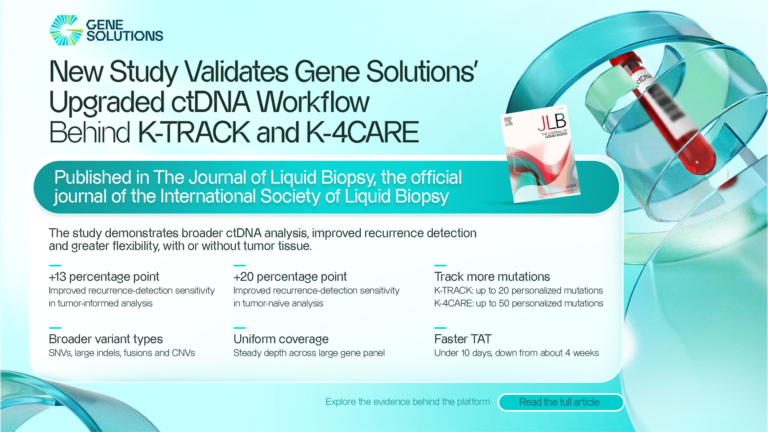
New Study Validates Gene Solutions’ Upgraded ctDNA Workflow Behind K-TRACK and K-4CARE

New Study Validates Gene Solutions’ Upgraded ctDNA Workflow Behind K-TRACK and K-4CARE

Peer-reviewed findings published in The Journal of Liquid Biopsy, an official journal of the International Society of Liquid Biopsy (ISLB), demonstrate broader ctDNA analysis, improved recurrence prediction, and greater flexibility with or without tumor tissue. SINGAPORE, 14 October 2026 – Gene Solutions announced the publication of a new peer-reviewed study validating the upgraded ctDNA workflow behind K-TRACK, K-4CARE, and K-TRACK Blood Only. Published in The Journal of Liquid Biopsy, an official journal of the International Society of Liquid Biopsy (ISLB), the study evaluated how Gene Solutions’ new hybrid-capture sequencing workflow and VarSURE bioinformatics pipeline improve upon its previous amplicon-based ctDNA method.

Read More

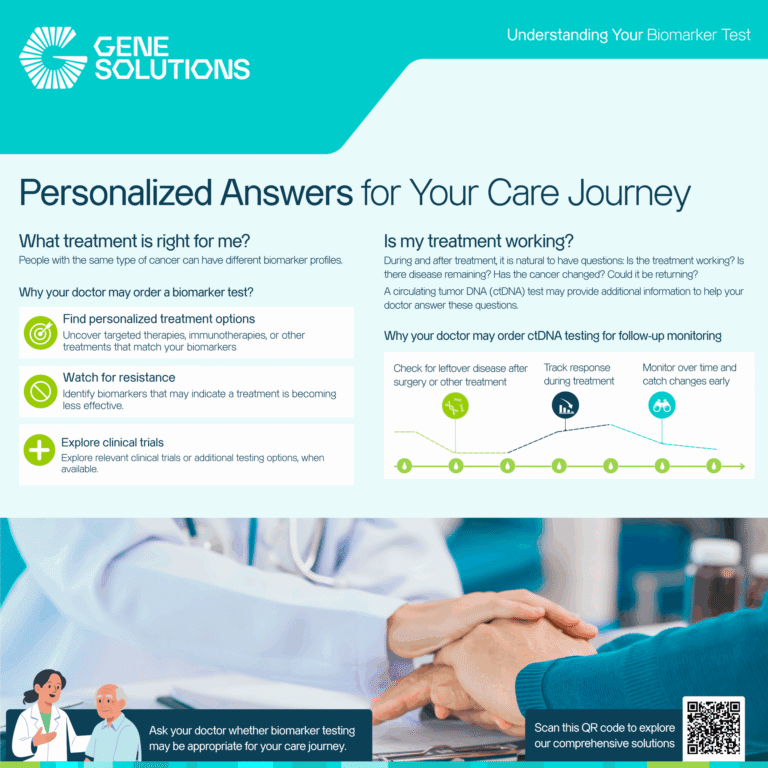
Biomarker and ctDNA Testing: A Personalized Approach to Cancer Care

Cancer diagnosis often brings many questions: Which treatment is most suitable for me? Is my treatment working? Has cancer changed? Could it come back? Every person’s cancer is different. Even when two people have the same type of cancer, their tumors may have different biological features. These differences can influence how the cancer behaves and how it responds to treatment. Biomarker and circulating tumor DNA, or ctDNA, testing may help doctors better understand these differences. Together, these tests may support more personalized treatment decisions and provide additional information as the cancer changes over time. Why can the same cancer respond

Read More
Gene Solutions NIPT preterm birth prenatal health

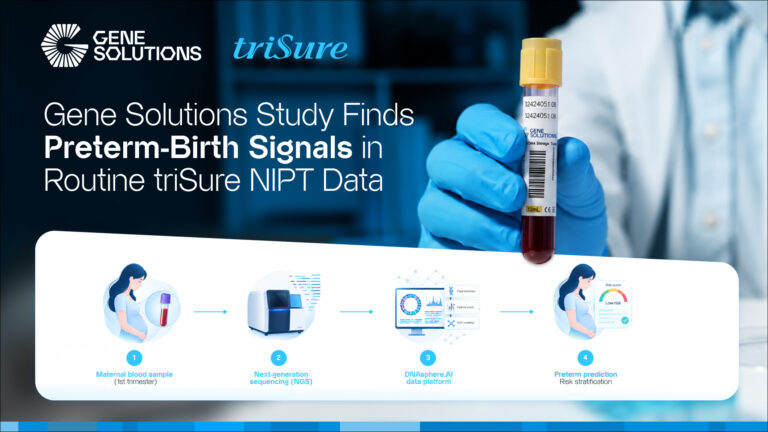
Gene Solutions Study Finds Preterm-Birth Signals in Routine triSure NIPT Data

A Gene Solutions study published in American Journal of Obstetrics & Gynecology (AJOG) Global Reports finds cell-free DNA fragmentomic patterns associated with spontaneous preterm birth, pointing to a potential path toward earlier pregnancy-risk assessment. SINGAPORE, Sept. 25, 2026 /PRNewswire/ — Gene Solutions, a global biotechnology company providing precision cell-free DNA solutions through multi-omics and artificial intelligence to improve pregnancy care, cancer detection and precision medicine, today announced the publication of a study showing the potential to assess the risk of spontaneous preterm birth from cell-free DNA fragmentomic signals already present in routine first-trimester non-invasive prenatal testing (NIPT) data. Published in AJOG Global Reports, the

Read More