Latest Study In Genetics Of Miscarriage At Asia-Pacific Congress In Maternal Fetal Medicine (APCMFM 2024)

We are proud to announce that Dr. Nguyen Vu Khanh and Dr. Nguyen Son Tung from Gene Solutions attended and presented important findings in the genetics of miscarriage at the 17th APCMFM 2024. 

The study examined fetal or placental samples from miscarriages occurring under 24 weeks of gestation. Its purpose was to investigate the causes of early miscarriages by identifying abnormal copy number variations (CNVs) and single-gene mutations in miscarriage fetuses. To achieve this, the researchers utilized Next-Generation Sequencing (NGS) to analyze DNA libraries and detect genetic abnormalities, focusing on 4503 genes through Clinical Exome Sequencing (CES).

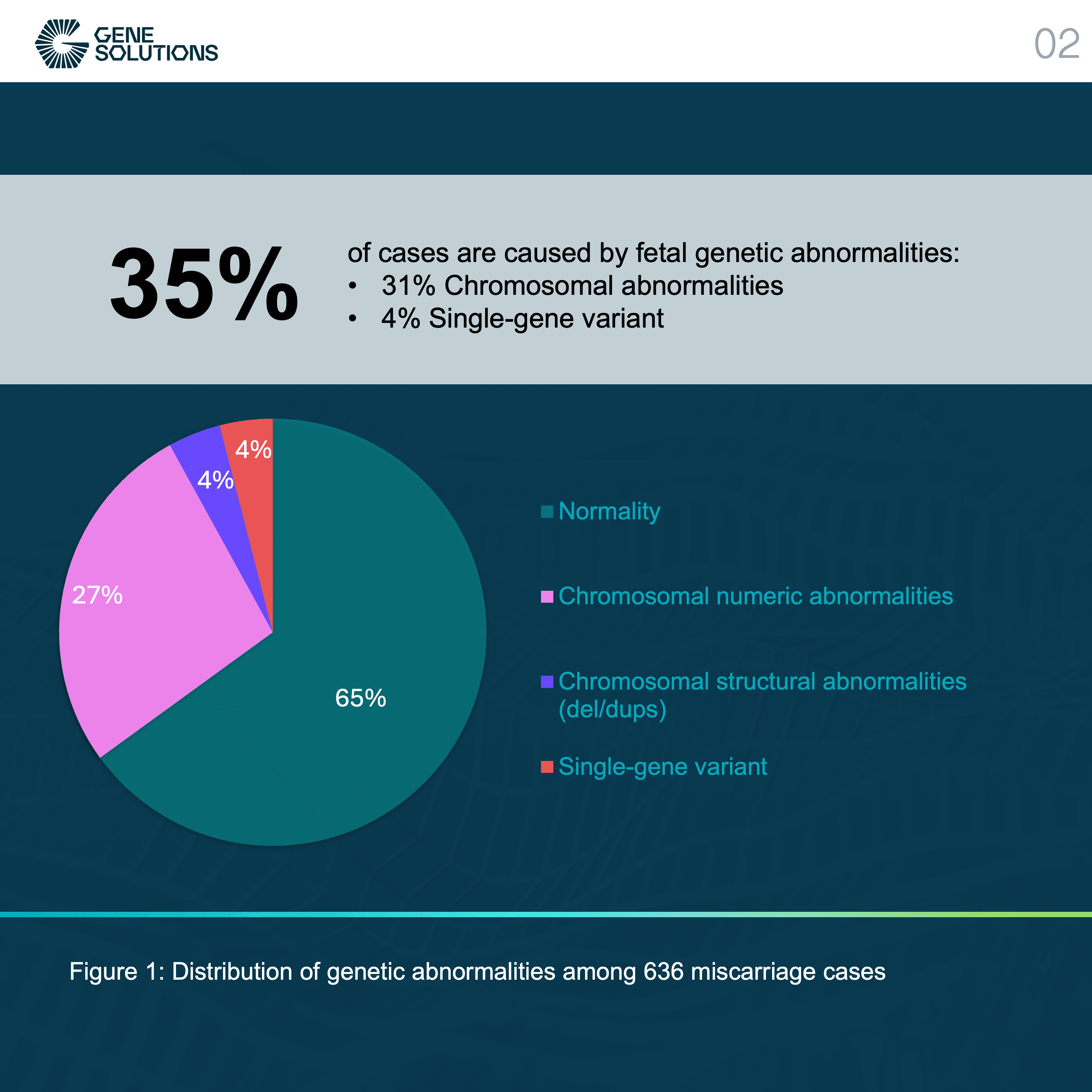
In 636 pregnancy loss cases, the study identified 223 cases with genetic abnormalities (96% chromosomal abnormalities and 4% single-gene variants). Chromosomal abnormalities are common genetic factors causing miscarriage. Identifying new genetic variations through this research may provide valuable insights into the molecular mechanisms leading to fetal demise. It provides reference data for the diagnosis and prevention of miscarriage. 

Dr. Nguyen Vu Khanh shared “Exploring the genetics of miscarriage reveals that 35% of cases are caused by fetal genetic abnormalities, highlighting the importance of genetic diagnosis in understanding the reasons for pregnancy loss and helping families achieve healthier pregnancies in the future.” 
Thank you to everyone who joined us at the APCMFM Congress and met our team of expert doctors!
#GeneSolutions #GeneticResearch #MaternalFetalHealth #APCMFM2024 #InnovativeHealthcare  
LATEST News

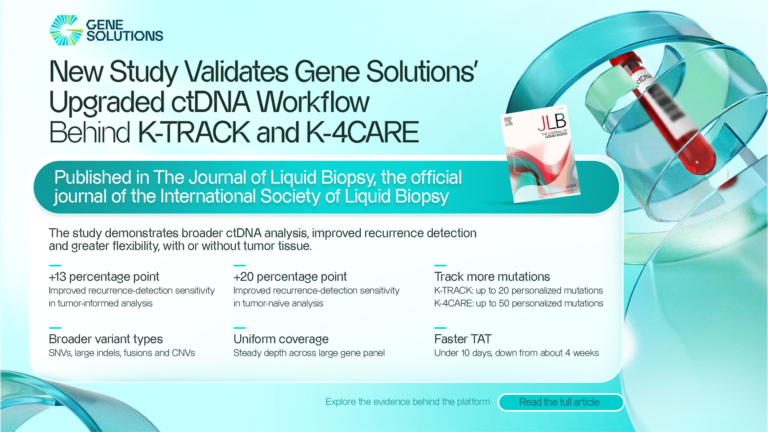
New Study Validates Gene Solutions’ Upgraded ctDNA Workflow Behind K-TRACK and K-4CARE

New Study Validates Gene Solutions’ Upgraded ctDNA Workflow Behind K-TRACK and K-4CARE

Peer-reviewed findings published in The Journal of Liquid Biopsy, an official journal of the International Society of Liquid Biopsy (ISLB), demonstrate broader ctDNA analysis, improved recurrence prediction, and greater flexibility with or without tumor tissue. SINGAPORE, 14 October 2026 – Gene Solutions announced the publication of a new peer-reviewed study validating the upgraded ctDNA workflow behind K-TRACK, K-4CARE, and K-TRACK Blood Only. Published in The Journal of Liquid Biopsy, an official journal of the International Society of Liquid Biopsy (ISLB), the study evaluated how Gene Solutions’ new hybrid-capture sequencing workflow and VarSURE bioinformatics pipeline improve upon its previous amplicon-based ctDNA method.

Read More

Biomarker and ctDNA Testing: A Personalized Approach to Cancer Care

Cancer diagnosis often brings many questions: Which treatment is most suitable for me? Is my treatment working? Has cancer changed? Could it come back? Every person’s cancer is different. Even when two people have the same type of cancer, their tumors may have different biological features. These differences can influence how the cancer behaves and how it responds to treatment. Biomarker and circulating tumor DNA, or ctDNA, testing may help doctors better understand these differences. Together, these tests may support more personalized treatment decisions and provide additional information as the cancer changes over time. Why can the same cancer respond

Read More
Gene Solutions NIPT preterm birth prenatal health

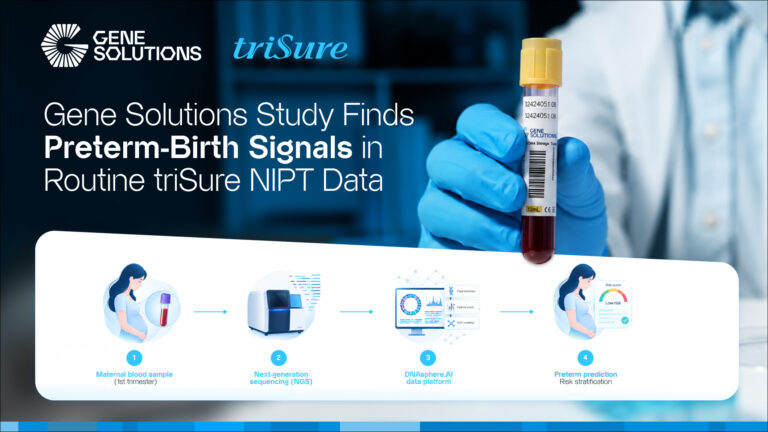
Gene Solutions Study Finds Preterm-Birth Signals in Routine triSure NIPT Data

A Gene Solutions study published in American Journal of Obstetrics & Gynecology (AJOG) Global Reports finds cell-free DNA fragmentomic patterns associated with spontaneous preterm birth, pointing to a potential path toward earlier pregnancy-risk assessment. SINGAPORE, Sept. 25, 2026 /PRNewswire/ — Gene Solutions, a global biotechnology company providing precision cell-free DNA solutions through multi-omics and artificial intelligence to improve pregnancy care, cancer detection and precision medicine, today announced the publication of a study showing the potential to assess the risk of spontaneous preterm birth from cell-free DNA fragmentomic signals already present in routine first-trimester non-invasive prenatal testing (NIPT) data. Published in AJOG Global Reports, the

Read More