According to the Global Cancer Observatory (GLOBOCAN) data, there were almost 409,000 new cancer cases in 2022, and the number tends to increase each year. More importantly, cancer is often detected at a late stage. (1),(2)(3). Breast cancer is the most common cancer, making up 16.2% of cancer cases. Lung cancer follows at 9.5%, with cervix uteri and colorectum close behind, accounting for about 9.0% and 8.7% of cases, respectively.(3) Notably, lung cancer is the top killer (14.1%) due to late-stage detection. These statistics highlight the urgent need for regular screenings and effective tools for early detection.
The timing of cancer detection can make a huge difference. When cancer is caught in its early stages, treatment is usually more effective, and patients have a better chance of recovery. Studies show that survival rates can go up to 99%, 91%, and 70% for breast, colorectal, and lung cancer, respectively, if radical treatment occurs at an early stage.(4)
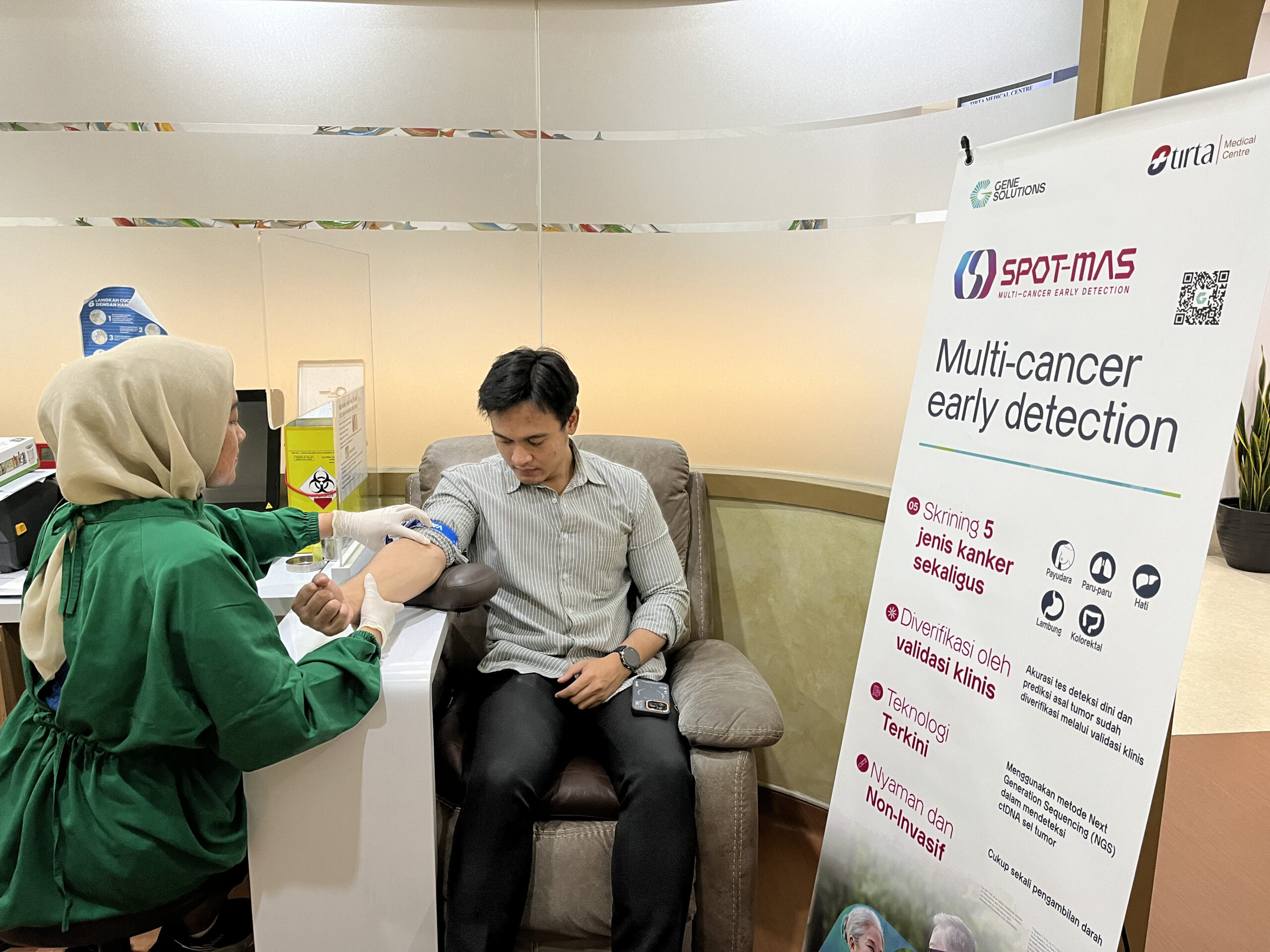
In its mission to improve cancer outcomes through precision DNA technology, Gene Solutions Indonesia is pioneering a proactive approach through the Multi-Cancer Early Detection (MCED) test known as SPOT-MAS. This innovative, clinical validated test uses highly advanced, cutting-edge technology to simultaneously screen for multiple types of cancer by detecting signals of circulating tumor DNA (ctDNA) in healthy individuals. By detecting tumor DNA signals before symptoms arise, SPOT-MAS provides a crucial opportunity for early intervention and improved treatment outcomes for Indonesians.
There are two versions of the SPOT-MAS test available at selected hospitals and clinics in Indonesia:
- SPOT-MAS 5: Detects the presence and location of the five most common cancers – liver, breast, lung, colorectal, and stomach. Currently, only breast, colorectal, and lung cancers have established screening methods, but compliance rates are often low due to invasive procedures, which only screen one organ per exam. Screening for the five most common cancers in one test helps reduce both time and operational costs for healthcare systems and high-risk individuals.
- SPOT-MAS 10: Includes the detection of five additional aggressive cancer types – uterus, esophagus, ovary, pancreas, and biliary tract. These cancer types notably do not have recommended screening methods yet (5).
These tests help catch cancer early, giving patients a better chance for successful treatment. But SPOT-MAS isn’t just about testing—it’s a call to action for awareness, early detection, and hope for better outcomes. Gene Solutions Indonesia is also partnering with medical societies such as Indonesian Society of Respirology (ISR/PDPI) to introduce and explore the application of genomic innovations in lung cancer treatment and early multi-cancer detection.
By spotting cancer early, we stand a better chance of stopping it, moving towards a future where cancer is no longer feared as a deadly disease.
References
(1) Anwar, S. L., Raharjo, C. A., Herviastuti, R., Dwianingsih, E. K., Setyoheriyanto, D., Avanti, W. S., Choridah, L., Harahap, W. A., Darwito, N., Aryandono, T., & Wulaningsih, W. (2019). Pathological profiles and clinical management challenges of breast cancer emerging in young women in Indonesia: a hospital-based study. BMC Women S Health, 19(1). https://doi.org/10.1186/s12905-019-0724-3
(2) Fles, R., Bos, A. C. R. K., Supriyati, N., Rachmawati, D., Waliyanti, E., Tan, I. B., Haryana, S. M., Schmidt, M. K., & Dewi, F. S. T. (2017). The role of Indonesian patients’ health behaviors in delaying the diagnosis of nasopharyngeal carcinoma. BMC Public Health, 17(1). https://doi.org/10.1186/s12889-017-4429-y
(3) GLOBOCAN Indonesia (2022)
(4) Statistics adapted from the American Cancer Society’s (ACS) publication, Cancer Facts & Figures 2022 and Cancer Facts & Figures 2021; the ACS website; and the International Agency for Cancer Research website. (All sources accessed January 2022.)
(5) American Cancer Society