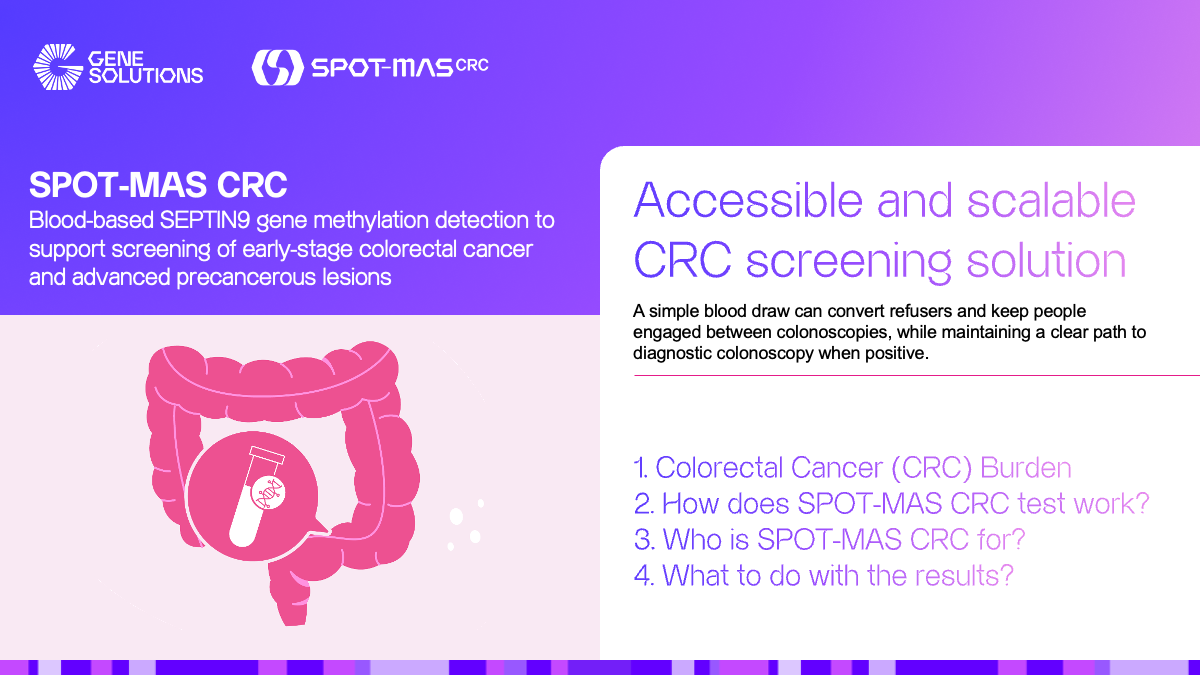
Article Summary: SPOT-MAS CRC is a non-invasive test using blood-based SEPTIN9 gene methylation detection to support screening of early-stage colorectal cancer and advanced precancerous lesions.
Achieving a sensitivity of 77.34% for CRC and 54.29% for Pre-Cancerous lesions, alongside a high specificity of 95.95%, SPOT-MAS CRC helps complement traditional screening modalities, empowering proactive cancer prevention.
1. The Burden of Colorectal Cancer & Current Screening Challenges
Disease Burden
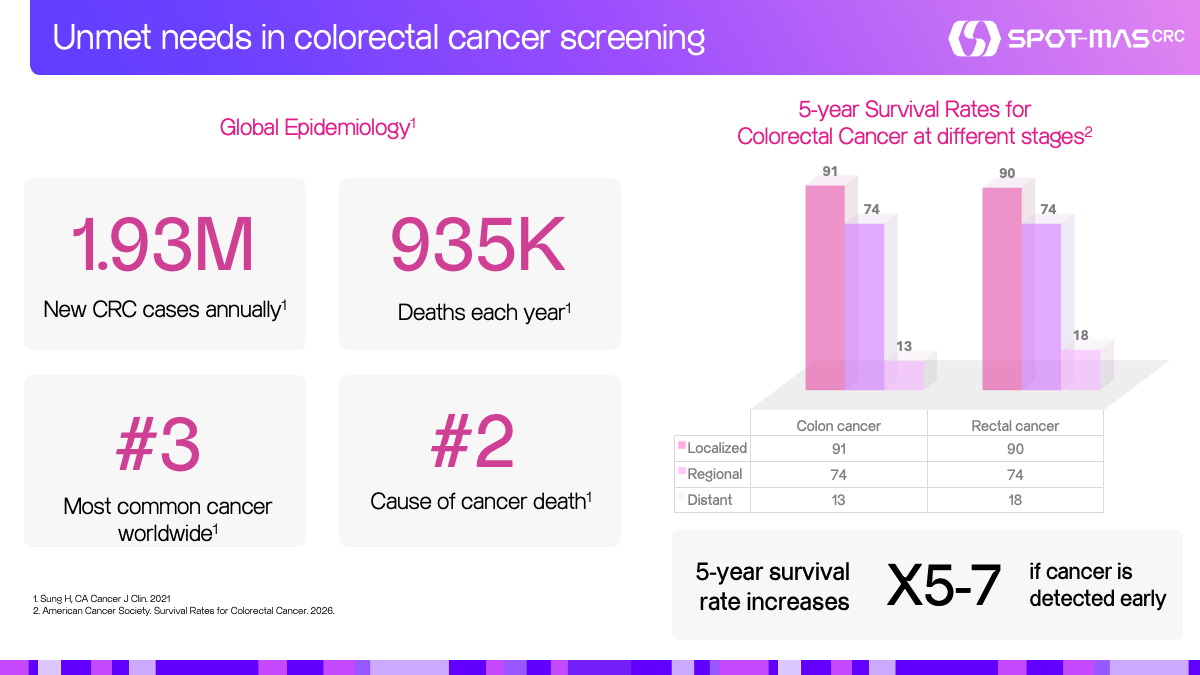
Colorectal cancer (CRC) remains the third most commonly diagnosed cancer (approximately 1.93 million new cases/year) and the second leading cause of cancer mortality worldwide (approximately 935,000 deaths/year) (1). Notably, the age of onset has been shifting toward younger populations.
However, CRC is among the most preventable and treatable cancers, particularly when detected early. When diagnosed at a localized stage, the five-year relative survival rate exceeds 90% (2).
Limitations of Current Screening Modalities
While established screening methods have saved many lives, they may still present clinical and practical barriers for some individuals.
- Patient Discomfort & Invasiveness: Invasive procedures (like colonoscopies) require extensive bowel preparation, while imaging methods may involve radiation exposure, creating significant physical and psychological barriers for patients.
- Low Adherence Rates: The burden of scheduling, preparing for, and undergoing multiple separate procedures for different organs leads to poor compliance, leaving many individuals unscreened until symptoms appear.
2. What is SPOT-MAS CRC?
Overview: Blood-based SEPTIN9 gene methylation detection to support screening of early-stage colorectal cancer and advanced precancerous lesions.
Workflow:
- Step 1: Plasma DNA extraction and bisulfite conversion.
- Step 2: Real-time PCR fluorescent probe detection (measuring SEPTIN9 methylation signals).
Clinical Performance:
- Sensitivity: 77.34% for Colorectal Cancer (CRC) and 54.29% for Pre-Cancerous lesions (3).
- Specificity: 95.95% in healthy individuals (3).
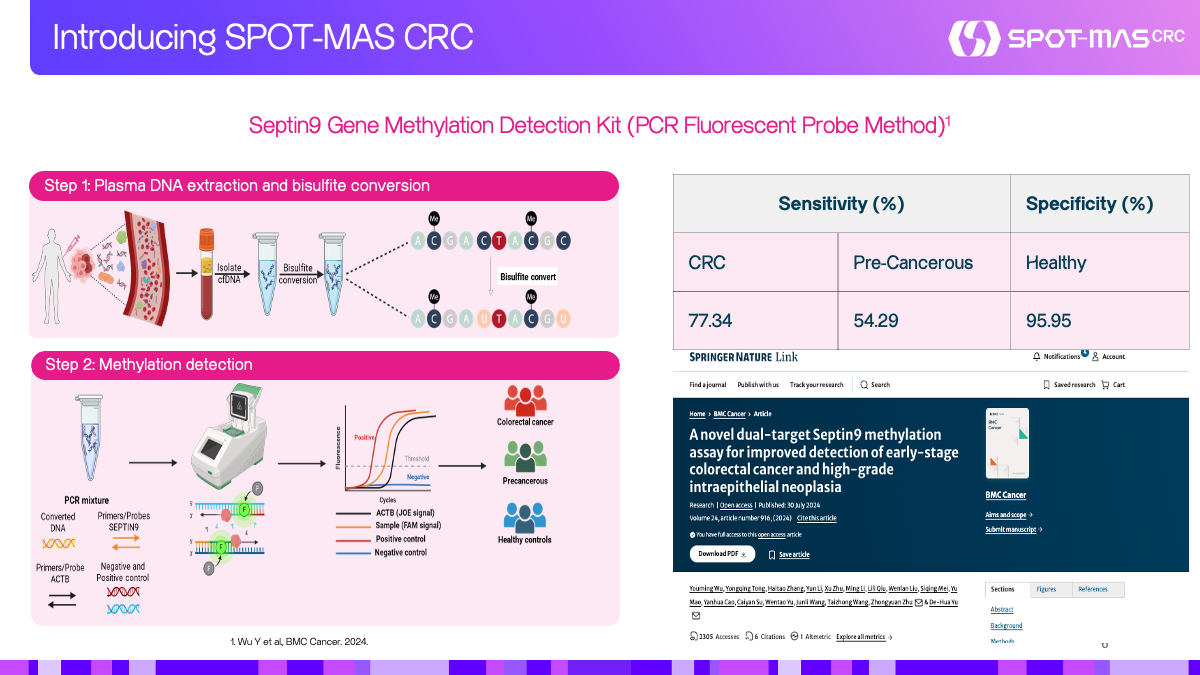
Clinical Significance: In addition to detecting colorectal cancer, SPOT-MAS CRC can identify a proportion of precancerous lesions, supporting earlier referral for diagnostic colonoscopy and potential clinical intervention before malignant progression.
3. Target Population for SPOT-MAS CRC Screening
SPOT-MAS CRC is designed as an accessible, non-invasive liquid biopsy screening tool for average-risk individuals and routine preventive care.
- Adults 45-75 years old: Individuals with no symptoms and no significant family history of colorectal cancer who require routine screening.
- Routine health check-up programs: Suitable for annual screening in health check packages and large-scale population screening.
- People who decline colonoscopy: Individuals who are unwilling or unable to undergo colonoscopy but still need colorectal cancer screening.
Important Clinical Note: SPOT-MAS CRC is a complementary blood-based screening test and does not replace colonoscopy for diagnostic confirmation. A positive result should be followed by timely colonoscopy to complete the screening process.
For technical documentation and clinical collaboration inquiries, please contact us.
Reference:
- Sung H, CA Cancer J Clin. 2021.
- American Cancer Society. Survival Rates for Colorectal Cancer. 2026.
- Wu Y et al., BMC Cancer. 2024.