Elevating Multi-Cancer Early Detection Through Genomic Innovation

On 7 February 2026, the Gene Solutions Hong Kong team co-organized a public health talk in Hong Kong that brought together 40+ participants—including patients’ families and health‑conscious individuals—to address a growing concern: the city’s rising cancer burden. 
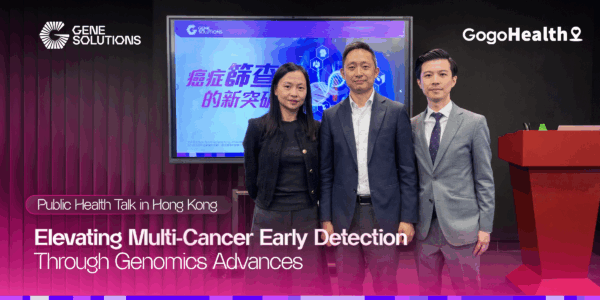
Cancer incidence continues to climb, yet many malignancies develop with non-specific symptoms that are easily mistaken for common conditions. This gap underscores the urgent need for broader and more comprehensive early detection strategies. 
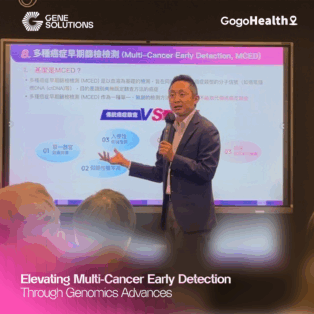
During the session, Dr. Ng Kim Pong Kenny presented on the topic “Technology Breakthrough of Multi-Cancer Screening in Hong Kong,” highlighting how emerging genomic innovations are reshaping the future of cancer detection.  

He noted that while traditional tumor markers and single-cancer screening methods remain important, their scope is inherently limited. Advances in precision genomics now enable the detection of cancer-associated signals from multiple cancer types through a single blood draw, opening new possibilities for broader early detection. 
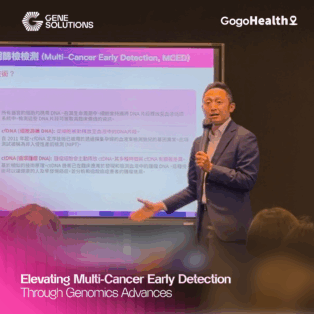
Supporting these advances in precision genomics, with a single 10 mL blood draw, a multi-omic and AI–powered blood test that supports detection of circulating tumor DNA (ctDNA) across 10 common and aggressive cancers, delivering 99.8% specificity and 78.1% sensitivity to enhance early detection and more precisely predict tumor location—often before physical symptoms appear.  


Why this matters for Hong Kong 

  • Broader reach: One blood draw may help assess signals from multiple tumor types. 
  • Triage support: When a signal is detected, clinicians can prioritize confirmatory imaging and follow‑up diagnostics more efficiently. 
  • Patient experience: A single blood draw reduces barriers to screening and helps assess cancers with no standard screening (e.g., gastric, liver, ovarian, pancreatic). 


Key takeaways from the health talk: 

  • Cancer is increasingly common, and many cancers lack specific early symptoms. 
  • Traditional tests remain valuable, but comprehensive approaches can widen the net for early detection. 
  • Multi‑omics, AI‑powered ctDNA testing can support clinicians with additional insights from a small blood sample. 
LATEST News

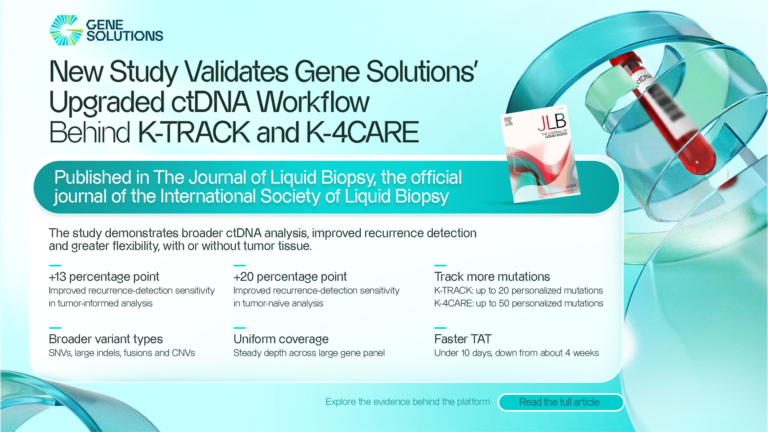
New Study Validates Gene Solutions’ Upgraded ctDNA Workflow Behind K-TRACK and K-4CARE

New Study Validates Gene Solutions’ Upgraded ctDNA Workflow Behind K-TRACK and K-4CARE

Peer-reviewed findings published in The Journal of Liquid Biopsy, an official journal of the International Society of Liquid Biopsy (ISLB), demonstrate broader ctDNA analysis, improved recurrence prediction, and greater flexibility with or without tumor tissue. SINGAPORE, 14 October 2026 – Gene Solutions announced the publication of a new peer-reviewed study validating the upgraded ctDNA workflow behind K-TRACK, K-4CARE, and K-TRACK Blood Only. Published in The Journal of Liquid Biopsy, an official journal of the International Society of Liquid Biopsy (ISLB), the study evaluated how Gene Solutions’ new hybrid-capture sequencing workflow and VarSURE bioinformatics pipeline improve upon its previous amplicon-based ctDNA method.

Read More

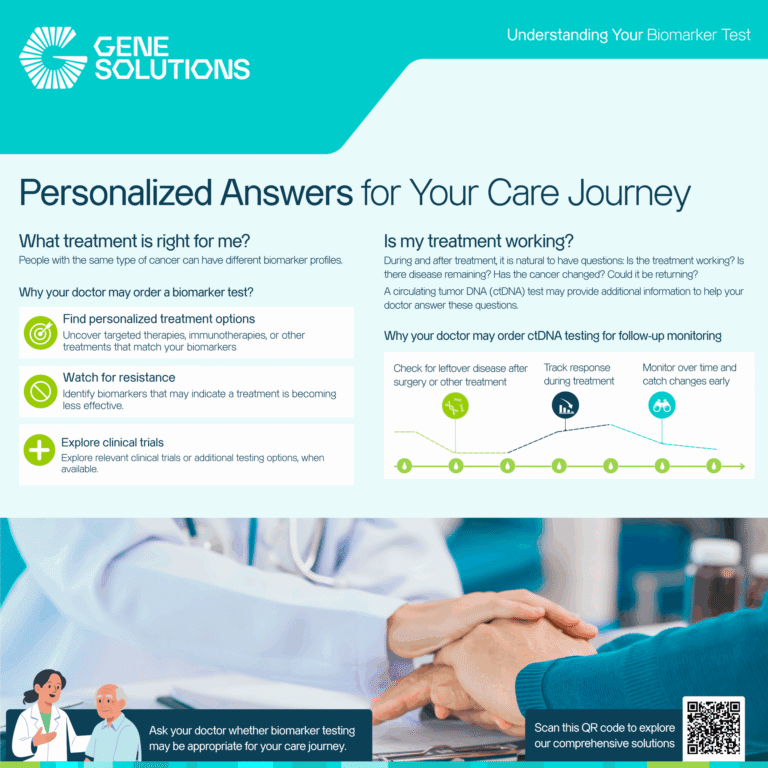
Biomarker and ctDNA Testing: A Personalized Approach to Cancer Care

Cancer diagnosis often brings many questions: Which treatment is most suitable for me? Is my treatment working? Has cancer changed? Could it come back? Every person’s cancer is different. Even when two people have the same type of cancer, their tumors may have different biological features. These differences can influence how the cancer behaves and how it responds to treatment. Biomarker and circulating tumor DNA, or ctDNA, testing may help doctors better understand these differences. Together, these tests may support more personalized treatment decisions and provide additional information as the cancer changes over time. Why can the same cancer respond

Read More
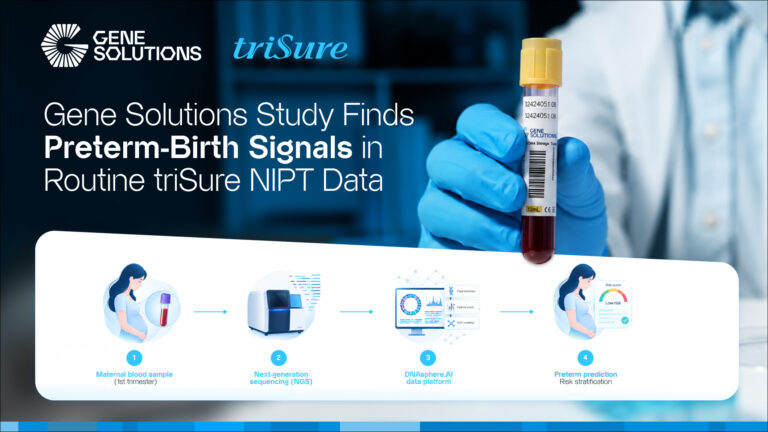
Gene Solutions NIPT preterm birth prenatal health

Gene Solutions Study Finds Preterm-Birth Signals in Routine triSure NIPT Data

A Gene Solutions study published in American Journal of Obstetrics & Gynecology (AJOG) Global Reports finds cell-free DNA fragmentomic patterns associated with spontaneous preterm birth, pointing to a potential path toward earlier pregnancy-risk assessment. SINGAPORE, Sept. 25, 2026 /PRNewswire/ — Gene Solutions, a global biotechnology company providing precision cell-free DNA solutions through multi-omics and artificial intelligence to improve pregnancy care, cancer detection and precision medicine, today announced the publication of a study showing the potential to assess the risk of spontaneous preterm birth from cell-free DNA fragmentomic signals already present in routine first-trimester non-invasive prenatal testing (NIPT) data. Published in AJOG Global Reports, the

Read More